

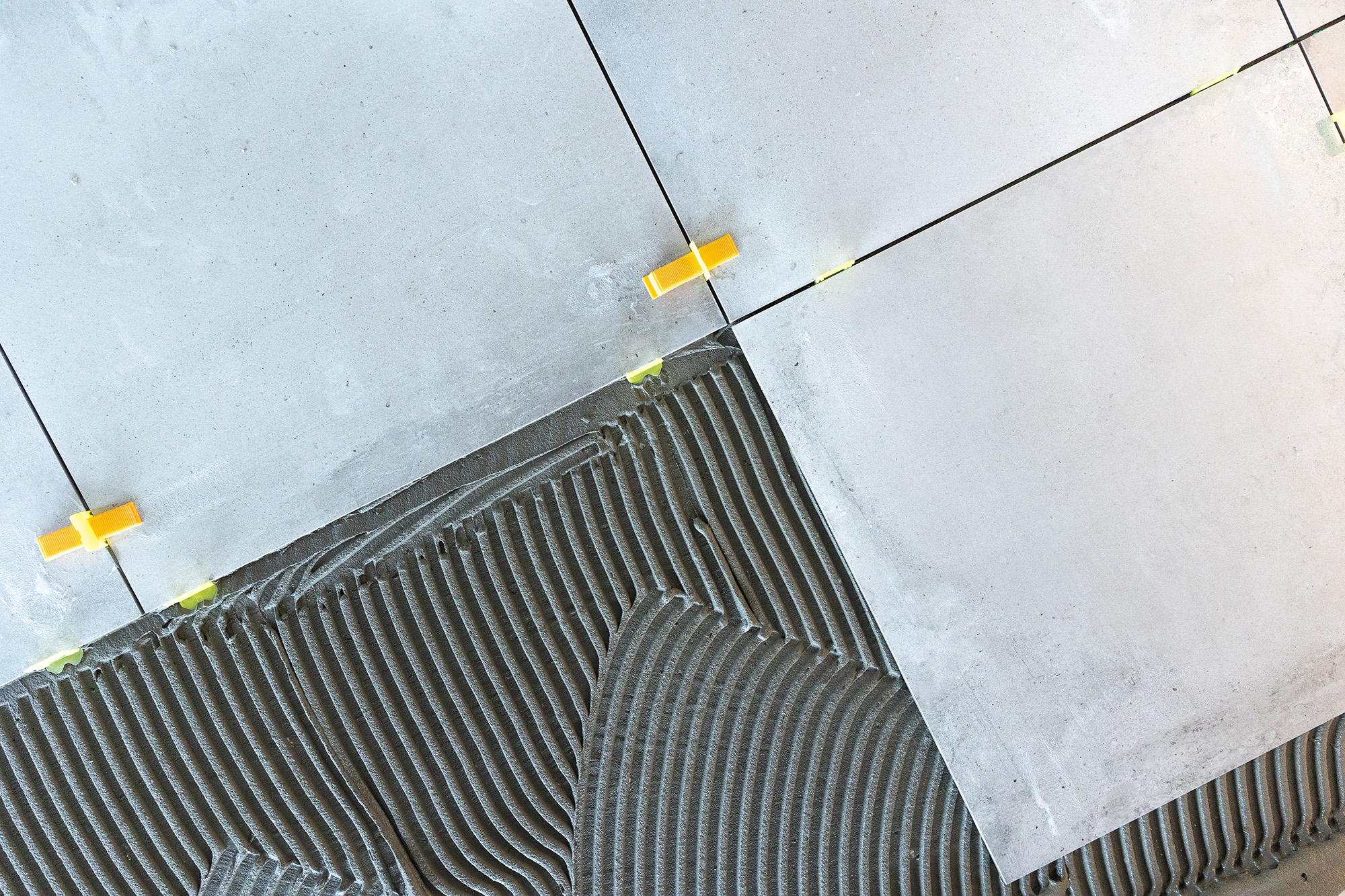
Two Different Numbers Doing Two Different Jobs
Every tile order includes an overage, and most homeowners assume that single number covers everything. It does not. The overage on a quote exists to cover cuts, breakage and the pieces that get trimmed to fit around doorways, cabinets and walls. By the time the job is finished, most of that has been used or ends up as offcuts too small to be useful.
Attic stock is a separate idea entirely. It is full, uncut tile deliberately set aside and stored after the job is done, held back for a repair that might not happen for years. One number gets the floor installed. The other keeps the floor repairable. Ordering only the first is the quiet decision that causes trouble much later.
What A Dye Lot Actually Is
Tile is manufactured in production runs, and each run carries a batch or lot number printed on the box. Within a run, the glaze, body colour and firing conditions stay consistent. Between runs, small differences appear. Clay bodies vary slightly, glaze mixes vary slightly, and kiln conditions are never identical twice.
Those differences are usually invisible when you compare two boxes side by side in a showroom. They become obvious when a replacement tile sits in the middle of an established floor surrounded by tiles from a different run. The eye is very good at spotting a single piece that does not quite belong, even when the shift is subtle enough that nobody could name what is different about it.
Why Reordering Later Often Is Not An Option
Tile lines change. Manufacturers retire colours, update collections and discontinue products, and a tile bought a few years ago may simply no longer exist to order. Even when a line is still in production, the specific lot that went into your floor is long gone, because runs are made, shipped and sold rather than held in reserve.
This is the part that catches people out. A cracked tile is a small problem when matching stock is sitting in the garage and a much larger one when it is not. Without a match, the realistic options are blending in a close replacement and accepting a visible difference, or pulling a tile from somewhere hidden like a closet floor to patch the visible area. Both work, but neither is as clean as simply having the right tile on hand.
How Much To Set Aside And How To Store It
The right amount depends on the room and the layout. A straightforward straight set floor in a small bathroom needs less held back than a large open area, and diagonal or herringbone layouts generate more cuts during installation, which affects the overage calculation separately from the attic stock decision. A good rule is to think in terms of enough full tiles to repair a small cluster rather than a single piece, since damage often affects a few neighbouring tiles at once.
Storage matters more than people assume. Keep the tile flat rather than on edge, in its original box, somewhere that stays reasonably dry and does not swing through extreme temperatures. Write the lot number, the room it belongs to and the install date on the outside of the box, and photograph the box label as well. The label is the only record of which run that tile came from, and it is remarkably easy to lose over a decade.
This Applies To Laminate Too
The same logic holds for laminate, with its own version of the problem. Laminate is produced in runs with batch numbers, décor patterns get updated or retired, and a plank from a later run can read slightly differently in tone or in the repeat of the printed grain. Keeping a few spare planks back serves exactly the same purpose as attic stock in tile.
Neither material is better or worse here, and this is not an argument for one over the other. It is simply how manufactured flooring works. Whichever you choose, the decision to keep spare stock is made at the point of ordering, and it is very difficult to go back and make it afterwards.
Ask About Attic Stock When You Order
Setting aside spare tile is a small decision at ordering stage and a significant one the day something cracks. Our team at Cozy Comfort Floors walks through overage and attic stock as two separate numbers so your floor stays repairable for years.
We proudly serve all of the Mississippi Gulf Coast from Gulfport, MS, and our tile range covers a wide selection of formats and finishes. If you are planning a tile project, contact us and we will help you work out the right quantity to keep.


