

The Rule Only Works In One Direction
This is the single most useful thing to understand before choosing wall tile. A tile rated for floors is generally fine on a wall, because it has already been built to handle more than a wall will ever ask of it. The reverse does not hold. A tile made specifically for walls should not go on a floor.
The reason is straightforward. Floor tile is manufactured to a breaking strength standard that accounts for people walking on it, furniture sitting on it and things being dropped on it. Wall tile faces none of that. It is often thinner and lighter by design, which makes it easier to set vertically without sagging while the mortar cures, but that same thinness is exactly why it is not suited to a floor.
Specifications That Stop Mattering On A Wall
Several numbers that drive floor tile decisions become irrelevant once the tile is vertical, and this is where wall tile gets genuinely more interesting to choose. Slip resistance is the clearest example. The DCOF rating that matters a great deal on a shower floor or a kitchen floor has no bearing on a wall, because nobody is standing on it.
Abrasion resistance works the same way. The PEI rating describes how a glazed surface holds up to foot traffic wearing it down over years, which is a floor concern and nothing else. Once those two constraints fall away, finishes that would be a poor choice underfoot become perfectly sensible on a wall, which is why polished and high gloss tiles show up so often in showers and backsplashes.
What Gloss Actually Does In A Small Room
Gloss on a wall earns its place for a practical reason rather than just a decorative one. A reflective surface bounces light around a room, and bathrooms on the coast are often small, interior and short on natural light. A glossy wall tile puts more of whatever light exists back into the space.
The tradeoff is that a reflective surface shows water spotting and soap film more readily than a matte one, particularly in a shower with hard water. That is a maintenance consideration rather than a reason to avoid it, and it is worth weighing against the light gain before committing. Matte and honed wall tiles are a sound choice too, and they hide spotting better while giving up some of that brightness.
Installation Changes More Than People Expect
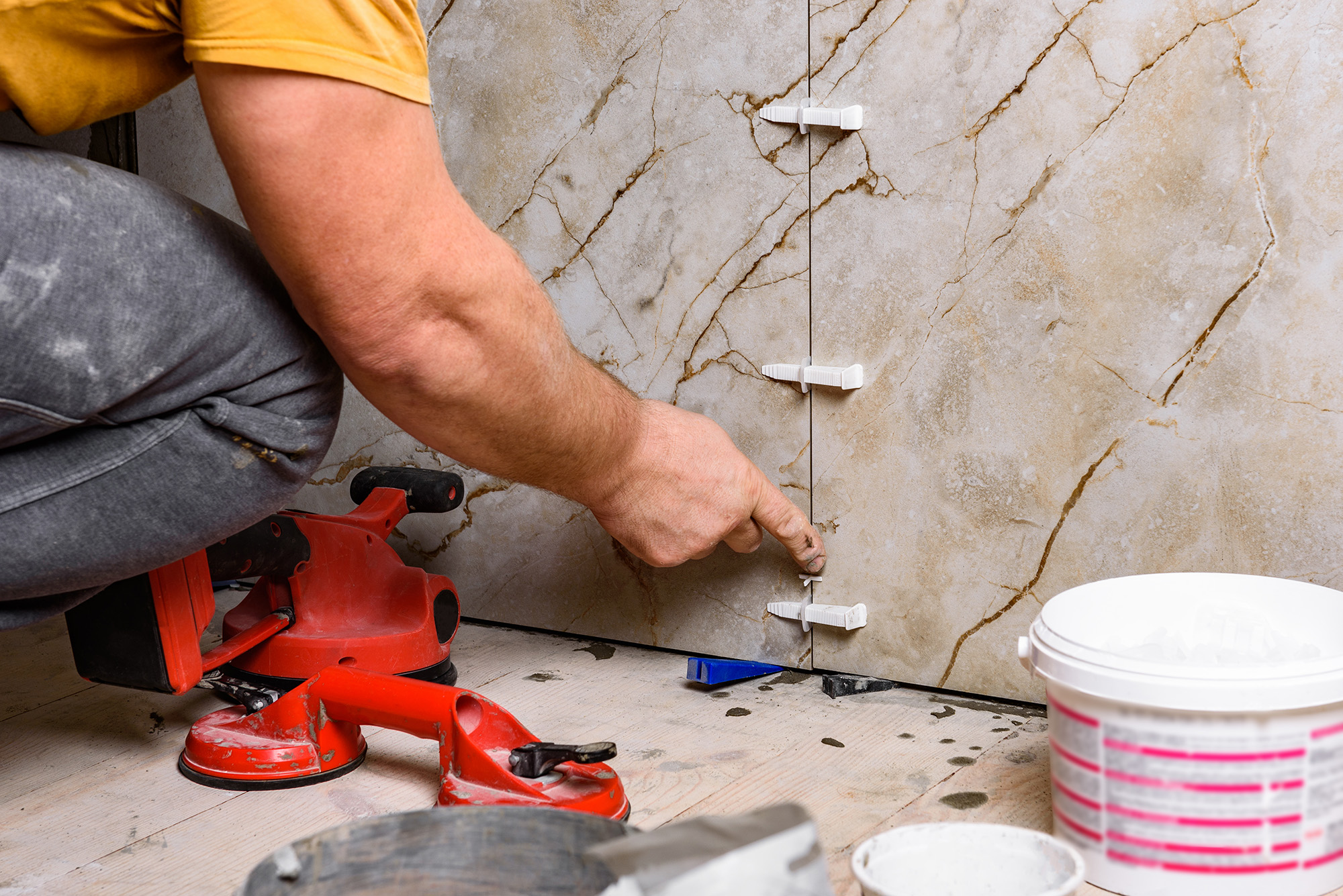
Setting tile vertically is a different job from setting it flat, and the materials reflect that. Wall installations use a non sag or non slump mortar formulated to hold a tile in place against gravity while it cures, rather than the standard mortar used on floors. Spacers and support systems do more work on a wall for the same reason.
The substrate differs too. A shower wall needs a suitable backer board and waterproofing before any tile goes on it, which is a different preparation sequence from a floor with its own substrate requirements. A kitchen backsplash is simpler, since it is not a wet area in the same way, but it still needs a sound, flat surface to start from. None of this makes wall tile harder in a problematic sense. It just means the prep is not interchangeable with floor prep.
Eye Level Changes How Much Scrutiny The Work Gets
A floor is looked at from around five or six feet above it, usually in passing. A shower wall is looked at from a few inches away, every day, under direct light. That difference is why lippage, grout line consistency and layout alignment all get noticed far more on a wall than on a floor.
Large format tile on a wall deserves particular thought here, because the same flatness issues that cause lippage on a floor become more visible at eye level, and the weight of a large tile adds its own installation considerations. Smaller formats and mosaic sheets are more forgiving in that respect. A backsplash is also a genuinely low risk place to try a bolder tile, since the area is small and it sits at a height where detail actually gets appreciated.
See Wall And Floor Tile Side By Side
Choosing wall tile opens up finishes that would not suit a floor, and knowing which rules still apply makes that choice much easier. Our team at Cozy Comfort Floors can walk you through what works where, including custom shower work.
We proudly serve all of the Mississippi Gulf Coast from Gulfport, MS, and our tile selection covers wall, floor, glass and mosaic options. If you are planning a shower or backsplash, contact us and we will help you choose tile suited to the surface it is going on.


