

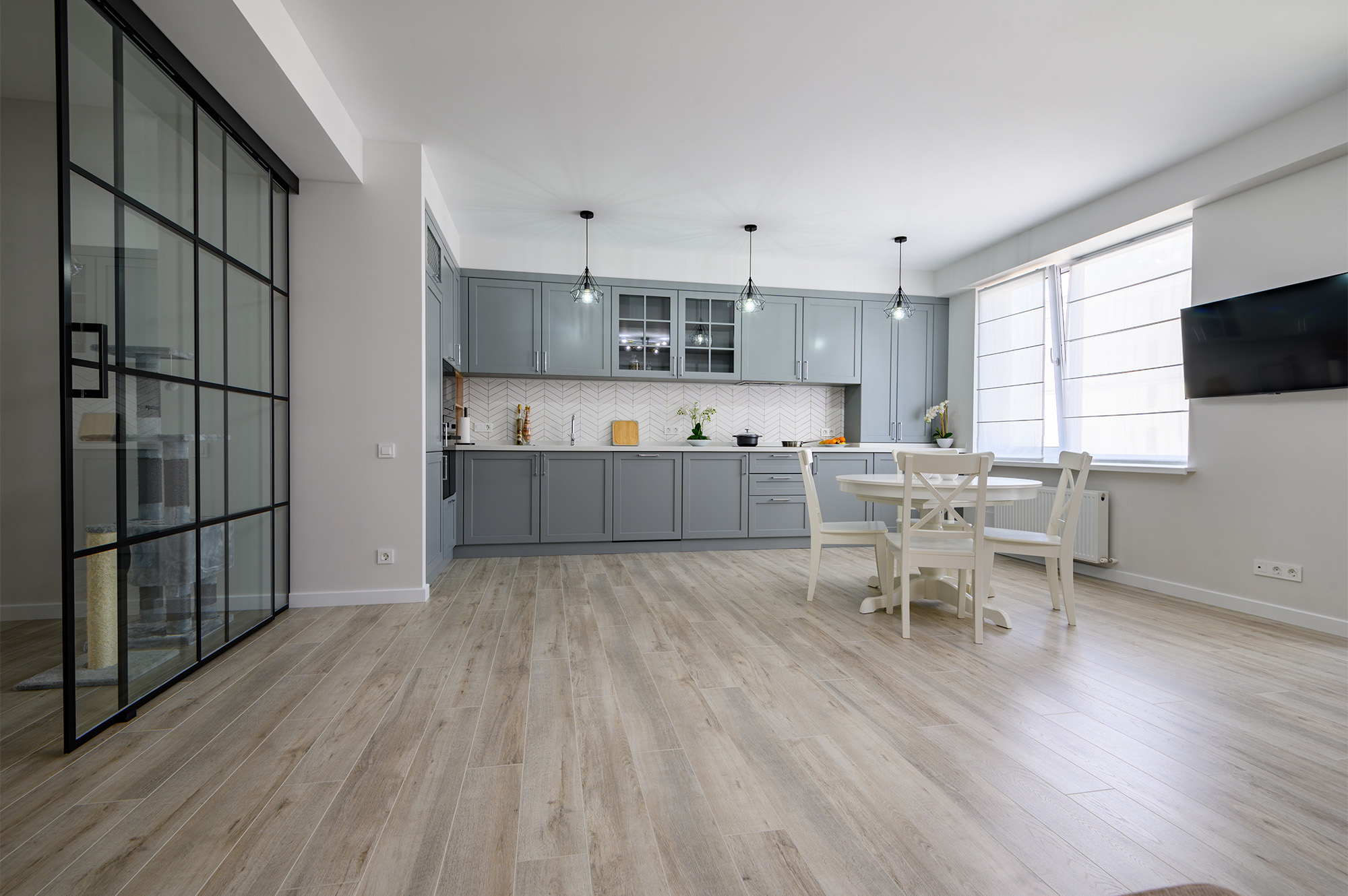
Most people choose matte laminate because it feels modern. The bigger win is technical: matte finishes scatter light instead of reflecting it in a tight beam. That scattering (diffuse reflection) is what makes day-to-day wear far less visible.
In real homes around Gulfport and the Mississippi Gulf Coast, traffic patterns are guaranteed: entryway to kitchen, kitchen to living room, living room to hallway. On higher-sheen laminate, those paths develop a telltale “lane” effect because the surface reflection changes as the texture micro-wears. On matte laminate, the same micro-wear is harder to see because there’s less mirror-like reflection to exaggerate it.
The “wear path” isn’t just scratches: it’s light behavior
Wear paths show up due to a few overlapping issues:
1) Micro-abrasion from grit (especially beach sand)
Fine sand acts like sandpaper. Over time it creates micro-scratches that change how light reflects off the top layer. Even if the floor is structurally fine, the optics shift and the path becomes visible.
2) Residue contrast under LEDs
Higher sheen surfaces reveal cleaning residue. If your floor ever looks “streaky” at night, it’s usually not dirt, it’s film. Matte reduces this problem.
3) Texture polishing over time
Some embossed textures can “polish” in the highest traffic zones. On semi-gloss floors, that polished zone becomes a spotlight.
What “sheen” really means for laminate performance
Laminate has a wear layer (often melamine-based) with visual and protective properties. Two key things matter:
Gloss level: How much direct reflection you get. Lower gloss means less highlight contrast.
Embossing + register (EIR): Texture aligned to the printed grain. It helps hide wear visually because the surface has controlled micro-variation.
Matte laminate typically pairs best with EIR textures. The floor keeps a consistent look because your eye reads texture and grain together.
Technical specs that matter when choosing laminate (not just “12mm”)
If you’re shopping laminate, thickness alone won’t save you from visible wear. Look at these instead:
AC rating (Abrasion Class):
AC3: light residential
AC4: general residential/high traffic
AC5: heavy traffic (often worth it if you have kids/pets)
Core type and density:
High-density cores handle click-lock stability better, which reduces joint movement that can create edge wear and noise.
Bevels (micro-bevel vs square edge):
Micro-bevel edges can hide minor subfloor imperfections and visually break up large areas.
Too much bevel can trap dust lines. For “always clean,” micro-bevel is usually the sweet spot.
Wear layer clarity + matte finish quality:
Not all matte is equal. Some “chalky matte” finishes can hold smudges. Better matte is smooth-cleaning but non-reflective.
The Gulf Coast reality: humidity + movement + walk paths
Along the coast, humidity swings can stress floating floors. Even great laminate will show issues if:
Expansion gaps are blocked (tight baseboards, too-tight transitions)
Subfloor isn’t flat enough (causes flex and joint stress)
Entryways aren’t protected from grit (sand micro-abrasion accelerates visible wear)
A matte finish won’t fix installation issues, but it does buy you visual forgiveness once the floor is properly installed.
Practical setup to keep matte laminate looking perfect
Use high-quality mats at entry points to trap sand
Sweep/vacuum grit often (soft roller attachments are ideal)
Use a cleaner designed for laminate (avoid oily products that leave film)
Avoid steam mops on click-lock laminate (heat + moisture can stress joints)
Matte laminate isn’t just a style choice. It’s a performance choice for real life: fewer visible wear paths, less streaking under LEDs, and a calmer look in high-traffic homes.
Visit us or contact Cozy Comfort Floors in Gulfport, MS to compare matte laminate options built for busy Mississippi Gulf Coast homes. We proudly serve Gulfport, Biloxi, Ocean Springs, D’Iberville, Long Beach, Pass Christian, Bay St. Louis, Waveland, Diamondhead, and communities across the Mississippi Gulf Coast.


