

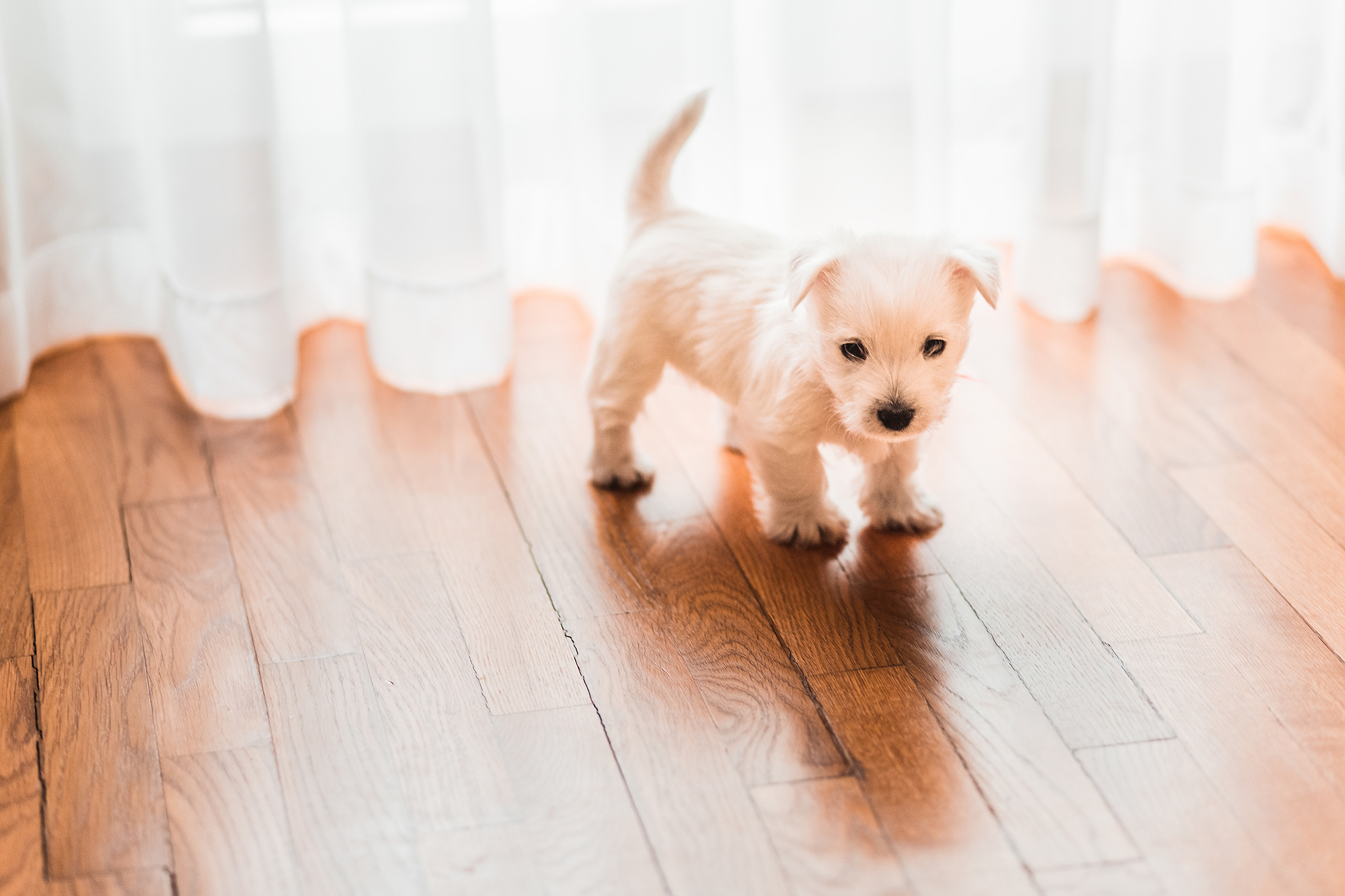
Laminate flooring can handle everyday life, but pet accidents are one of the fastest ways to trigger long-term problems, especially if liquid reaches the seams. Once urine wicks into joints and hits the core or underlayment, you can end up with edge swelling, seam peaking, or an odor that reappears no matter how many times you clean the surface.
Across Gulfport, MS and the Mississippi Gulf Coast, humidity adds another layer: drying takes longer, and longer drying time increases the chance of swelling and odor absorption. Cozy Comfort Floors helps homeowners choose laminate that fits real life with pets, but just as important is knowing what to do immediately when accidents happen.
Here’s the detailed, technical playbook.
How laminate fails when liquids sit
Laminate is a stack of layers locked together:
Wear layer: protects the surface
Decor layer: the visual
Core (often HDF): swells when moisture penetrates
Backing: stabilizes
Click-lock joint: the gateway for wicking
Even “water-resistant” laminate usually fails at the joint first. The surface can look fine while the seam is already absorbing liquid.
Why urine is harder than plain water
Urine contains:
Water (the carrier)
Salts and urea (can crystallize and hold odor)
Ammonia compounds (odor and marking behavior)
Organic material (feeds bacteria if it penetrates)
Surface cleaning alone often removes smell temporarily but doesn’t neutralize what has wicked below.
The first 10 minutes (precision routine)
Minute 0–2: Blot with pressure, don’t spread
Place absorbent towels over the accident.
Press straight down firmly. Stand on it if needed.
Avoid wiping because it pushes liquid into seams and expands the affected area.
Minute 2–4: Extract from seams (non-negotiable)
Use a towel edge to press along every seam near the spot.
If you have a wet/dry vac, run it along the seams for quick extraction.
If you can remove liquid before it wicks, you prevent most damage.
Minute 4–7: Treat odor without flooding
Use a laminate-safe enzyme cleaner:
Spray onto a cloth, not directly on the floor.
Dab the area, then dab along seams.
Use minimal moisture.
Why minimal moisture matters: if you soak the surface, you can push contaminants into the underlayment, making odor harder to eliminate.
No enzyme cleaner available right now?
Lightly damp cloth with clean water, then dry thoroughly.
Get enzyme cleaner as soon as possible and treat again, still using cloth-application.
Minute 7–10: Dry fast and keep airflow moving
Dry towels immediately.
Point a fan at the spot.
Run AC/dehumidifier if it’s humid.
Fast drying reduces swelling risk and slows bacterial activity.
Quick seam health check
Look for:
darker seam edges
slight edge lift
softness when pressing at joints
If you see any of these, keep airflow going longer and avoid heavy traffic over the area.
The next 24 hours (where long-term outcomes are decided)
1) Repeat enzyme treatment lightly
Enzymes need time to work, but don’t “soak.” Apply to cloth, dab, and keep the floor dry as possible.
2) Use airflow, not water, as your main tool
Keep fan/AC running for several hours. In humid conditions, longer is better.
3) Don’t cover the spot
Rugs trap moisture and can lock odor into the area.
4) Monitor the seam line
If swelling begins, it can show up hours later. Catching it early helps you avoid additional stress on the joint.
What not to do (these cause permanent damage)
No steam mops: steam can drive moisture into joints and accelerate swelling.
No ammonia-based cleaners: they don’t neutralize urine properly and can encourage repeat marking.
No heavy wet-scrubbing: flooding pushes urine deeper.
No bleach as a “fix”: it may discolor and doesn’t solve underlayment odor.
If odor returns after “successful” cleaning
Odor returning usually means penetration below the surface. Here’s how to verify without guesswork:
Smell is strongest at seams or edges: likely seam wicking.
Smell returns on humid days: underlayment/subfloor contamination can become more noticeable when moisture rises.
Repeated accidents in one spot: even small amounts over time can bypass the seam defenses.
At that point, the most effective approach is targeted: keep moisture controlled, continue enzyme treatment correctly, and consider professional evaluation if the area has been hit multiple times.
Preventing repeat issues: the pet-proof laminate mindset
If you’re choosing laminate for a pet home, prioritize:
tighter locking systems (reduces capillary wicking)
better joint sealing technology (varies by product)
higher abrasion resistance for claws
matte/low sheen finishes to hide micro-scratches
correct underlayment and moisture strategy for humid climates
And remember: even the best laminate can fail if installation shortcuts were taken (poor expansion gaps, uneven subfloor, wrong underlayment, or no moisture testing on slabs).
When to call a pro
Get professional help if:
seams peak or edges swell and don’t settle after drying
odor persists or returns repeatedly
multiple accidents happened over weeks in the same area
A pro can determine if it’s surface-only, seam-related, or an underlayment/subfloor issue, and whether plank replacement is needed.
The best way to stop laminate damage from pet accidents is a fast, seam-focused response: blot with pressure, extract from joints, neutralize with enzyme cleaner without flooding, and dry aggressively with airflow. Do it within the first 10 minutes and you dramatically reduce swelling, seam separation, and lingering odor.
If you want pet-friendly laminate recommendations, expert installation suited to Gulf Coast humidity, or help choosing a floor that matches your household, contact Cozy Comfort Floors or visit our Gulfport, MS showroom. We proudly serve the Mississippi Gulf Coast, including Gulfport, Biloxi, Ocean Springs, D’Iberville, Long Beach, Pass Christian, Bay St. Louis, and Waveland.


