

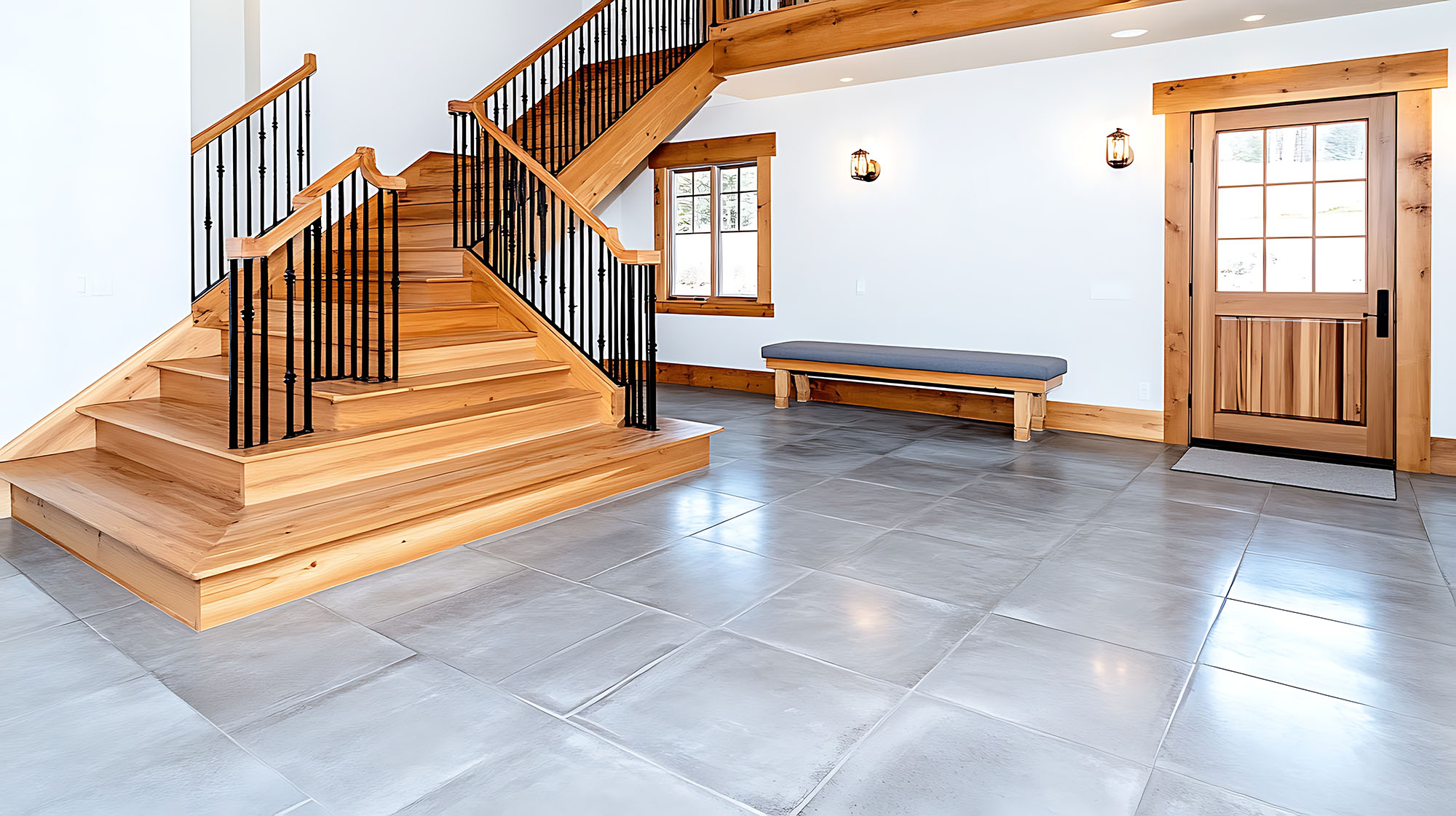
Tile is one of the most moisture-resistant flooring choices for coastal homes, especially when the tile itself is porcelain. It can handle surface water better than many wood-based, fiber-based, or floating floor products. That is why tile is commonly used in kitchens, bathrooms, laundry rooms, and other wet-prone areas.
But tile being water-resistant does not mean the entire floor assembly is waterproof. After a roof leak, water may travel down walls, behind trim, under cabinets, through grout joints, or into small cracks. The tile surface may look clean and dry while moisture remains in the layers around it.
Roof Leak Water Rarely Moves in a Straight Line
A roof leak does not always drip directly onto the floor below the damaged area. Water can travel along rafters, insulation, drywall, wiring, framing, and wall cavities before it finally appears inside the room. By the time water reaches the tile floor, it may be several feet away from the original leak source.
Once water reaches the floor, it follows gravity, low points, grout lines, wall edges, and small gaps. It may collect behind baseboards or settle under built-in cabinetry before anyone notices. This is why a small ceiling leak can sometimes create a flooring issue that shows up later, not immediately.
Grout and Hollow Sounds Can Reveal Trouble
Grout is often where the first warning signs appear. Darkened grout, loose grout, chalky residue, musty smells, or recurring haze can all suggest that moisture moved through the floor area. Cement-based grout is not a waterproof membrane, so water can pass through it if the exposure is long enough.
The bond beneath the tile also matters. If water gets into the mortar bed or reaches poorly bonded tile, the floor may start sounding hollow when tapped. In some cases, cracks or loose tiles appear weeks after the roof leak, once the moisture has had time to weaken surrounding materials or expose installation flaws.
When Tile Can Stay and When It Needs Attention
Not every tile floor has to be removed after a roof leak. If the leak was minor, cleaned quickly, and the room dries properly, the tile may remain in good condition. This is one reason tile is still a smart flooring choice for many Gulf Coast homes.
However, the floor deserves a closer inspection if water sat for hours, affected baseboards, reached cabinets, caused odor, or showed up after repeated rain. Swollen trim, soft drywall, loose grout, stained edges, or musty smells are signs that the problem may be bigger than the visible floor surface.
Tile can be a durable flooring choice after moisture exposure, but a roof leak should still be taken seriously. The tile face may survive while grout, mortar, baseboards, cabinets, drywall, or the subfloor hold moisture. A proper inspection looks at the full system, not only the surface you can see.
If your home in all of the Mississippi Gulf Coast has had a roof leak or storm-related water issue, Cozy Comfort Floors can help you evaluate tile flooring options with practical Gulf Coast conditions in mind. Visit Gulfport, MS or contact us to compare tile products, discuss replacement needs, and plan the right next step before hidden damage gets worse.


